Why Calprotectin Is the First Marker Practitioners Look At
Calprotectin is one of the few stool markers that speaks directly to intestinal inflammation rather than inferring it. Most functional stool markers describe microbial populations or digestive capacity. Calprotectin measures a protein released by immune cells at the site of inflammation, which is what makes it useful early in a workup.
That specificity matters because gastrointestinal presentations overlap. Loose stools, cramping, urgency, and bloating look similar across inflammatory bowel disease, irritable bowel syndrome, viral infection, and food sensitivity reactions. Calprotectin helps separate inflammatory from non-inflammatory patterns before a treatment plan is built.
This post covers what calprotectin is, what each result range indicates, which conditions it is associated with, what can distort a result, and how practitioners approach elevated levels clinically.
What Is Calprotectin?
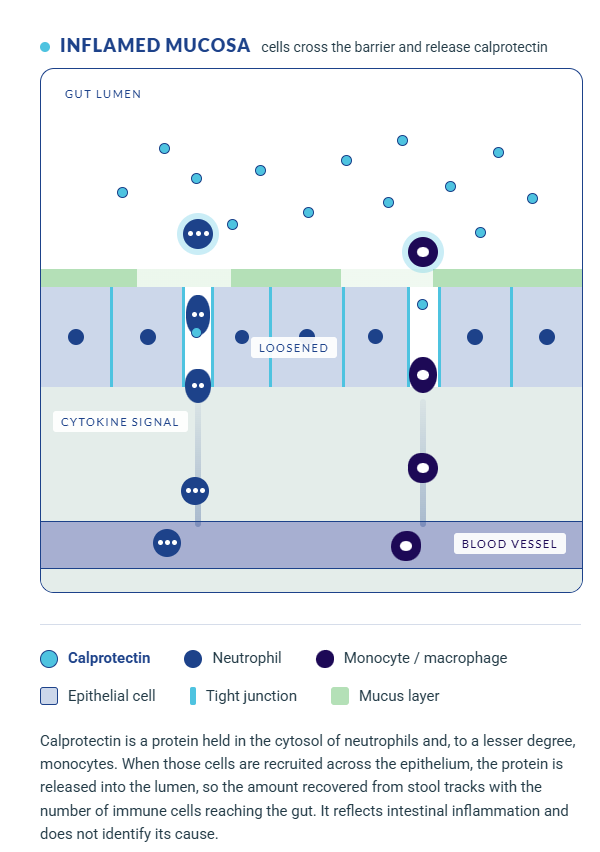
Calprotectin is a calcium-binding protein released by neutrophils, monocytes, and reactive macrophages. When the intestinal mucosa is inflamed, these immune cells migrate into the gut and the protein is shed into the stool.
Two properties make it practical as a stool marker:
It is very stable in stool, which makes at-home collection viable without the sample degrading in transit.
It scales with inflammatory activity. Multiple studies have associated increased calprotectin levels with the degree of inflammatory bowel disease activity in both children and adults.
Calprotectin is measured on the US BioTek™ GI Standard Profile and GI Advanced Profile as part of the GIT Functional Markers section. It is not included on the GI Basic Profile, which covers PCR microbiome identification only.
What Different Calprotectin Ranges Mean
Calprotectin is reported in micrograms per gram of stool. US BioTek's reference range is under 50.0 µg/g, and results are interpreted across three bands.
High calprotectin: above 200 µg/g
Levels above 200 µg/g are associated with active inflammatory bowel disease and gastrointestinal inflammation. Elevation may also occur due to bacterial infection, colitis, or, less commonly, cancer. Calprotectin should be reassessed after about four weeks for confirmation, since a single elevated result does not distinguish a transient inflammatory event from ongoing disease activity.
Moderate calprotectin: 50 to 200 µg/g
This band is an indicator of chronic inflammation. Inflammation at this level may reflect inflammatory bowel disease in remission, or inflammation caused by non-steroidal anti-inflammatory drugs. As with high results, levels should be reassessed after about four weeks.
Low calprotectin: below 50 µg/g
Low calprotectin is usually associated with viral gastrointestinal infections or non-inflammatory bowel conditions such as irritable bowel syndrome. A low result in a symptomatic patient is clinically useful information: it points the workup away from an inflammatory driver and toward motility, digestion, microbiome composition, or food sensitivity.
Calprotectin ranges at a glance
Range
Result band
Most commonly associated with
Follow-up
Below 50 µg/g
Low
Viral GI infection, non-inflammatory conditions such as IBS
Investigate non-inflammatory drivers
50 to 200 µg/g
Moderate
Chronic inflammation, IBD in remission, NSAID-driven inflammation
Reassess after about 4 weeks
Above 200 µg/g
High
Active IBD, GI inflammation, bacterial infection, colitis, occasionally cancer
Reassess after about 4 weeks for confirmation
Case Study: When Symptoms and Inflammation Disagree
Clinical case contributed by Dr. Rachel Onah BSc. ND MRN. Patient details have been limited to protect identity.
A 54-year-old woman with a long-standing history of inflammatory bowel disease, specifically Crohn's disease, was interested in changing her treatment plan. She had been receiving infliximab, a biologic medication used to control inflammation in moderate to severe IBD, but wanted to discontinue biologic therapy and transition to prednisone and mesalamine.
The patient maintained a health-conscious lifestyle and followed a paleolithic-style diet. Because she wanted additional information about her intestinal health before making a medication change, a GI Advanced Profile was performed to evaluate markers associated with intestinal inflammation, gastrointestinal function, and the gut microbiome.
One of the important considerations in inflammatory bowel disease is that symptoms alone do not always tell the full story. A patient may feel relatively well while underlying intestinal inflammation persists.
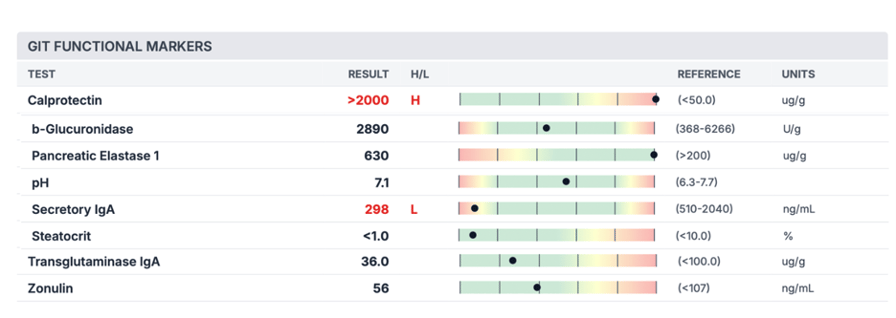
In this case, the GI Advanced Profile provided additional information that raised concern about ongoing intestinal inflammation. Calprotectin was elevated, and occult blood was also present in the stool, providing another important clinical finding that warranted consideration in the overall assessment.
The assessment also demonstrated several findings involving the patient's gastrointestinal environment, including:
Elevated calprotectin, above 2000 µg/g, suggesting that intestinal inflammation remained an important consideration despite the patient's efforts to maintain a healthy diet and lifestyle.
Increased levels of Klebsiella species, an autoimmune triggering bacterium.
Increased levels of Citrobacter species, another autoimmune triggering bacterium.
Presence of occult blood in the stool.
The treatment decision
The patient had hoped that the testing would support discontinuing infliximab and transitioning to prednisone and mesalamine. However, the results did not provide reassurance that inflammation was adequately controlled.
Given the patient's history of Crohn's disease and the evidence suggesting ongoing intestinal activity, the clinical decision was to continue infliximab rather than discontinue biologic therapy. The primary goal was to maintain control of intestinal inflammation and avoid making a medication change based solely on symptoms or the patient's desire to reduce her medication burden.
Care also focused on addressing the elevated levels of Klebsiella species and Citrobacter species, which may be associated with intestinal dysbiosis and could potentially contribute to impaired intestinal barrier function and elevated zonulin levels. In addition, supportive naturopathic interventions, including omega-3 fatty acids, curcumin, and Boswellia, were recommended as part of a comprehensive approach to help support a healthy inflammatory response.
What Conditions Are Associated With Elevated Calprotectin?
Calprotectin is a marker of intestinal inflammation, not a marker of a specific disease. Interpretation depends on the level and on the rest of the clinical picture. The conditions associated with elevated results include:
Inflammatory bowel disease. Calprotectin correlates with the degree of IBD activity in children and adults, and early diagnosis is required to optimize management of IBD patients.
Colitis and bacterial infection. Both can drive high results independent of underlying IBD.
NSAID-associated inflammation. Aspirin and non-steroidal anti-inflammatory drugs may elevate calprotectin levels.
Liver disease, which may also elevate levels.
Cancer, which is an uncommon but recognized cause of high results and part of why confirmation testing matters.
Calprotectin is also used in the other direction. Because low levels are usually associated with viral infections or non-inflammatory bowel conditions such as IBS, the marker supports clinical assessment of whether an inflammatory process is present at all.
What Can Distort a Calprotectin Result
A calprotectin value is only as useful as the context around it. Several factors can raise or suppress a result independent of intestinal inflammation.
May elevate calprotectin:
Use of aspirin or non-steroidal anti-inflammatory medications
Liver disease
Red blood cell transfusions
Newborn status. Fecal calprotectin levels may be increased in newborns and may not indicate IBD in this population.
May suppress an expected elevation:
Immunosuppressive therapies or chemotherapy, which may neutralize normal immune responses and prevent the expected rise in inflammatory and immunology markers
Prescription anti-inflammatories such as steroids or immunosuppressant medications, which may depress the level of inflammatory markers on the GI profiles and may also alter the microbiome
This is the practical reason to collect a full medication history alongside the sample. A normal calprotectin in a patient on immunosuppressants does not carry the same meaning as a normal calprotectin in an untreated patient.
Reading Calprotectin Alongside the Rest of the Panel
Calprotectin is reported next to the other GIT Functional Markers: pancreatic elastase, secretory IgA, zonulin, beta-glucuronidase, steatocrit, and anti-gliadin IgA. Because all parts of the digestive system are interconnected, one change in a patient's homeostasis may affect multiple biomarkers at once.
Patterns worth reading together:
Calprotectin with zonulin. The inflammatory fecal markers calprotectin, secretory IgA, zonulin, beta-glucuronidase, and anti-gliadin IgA help clinicians distinguish between autoimmune inflammatory bowel disorders and other inflammatory gastrointestinal disorders. High fecal zonulin has been associated with local inflammation and increased intestinal permeability.
Calprotectin with steatocrit. Inflammatory markers together with a high steatocrit likely indicate an inability to assimilate fats, which in turn alters the bacteria of the gut microbiome.
Calprotectin with the microbiome mapping section. Loss of diversity in normal gut flora can result in an increased number of commensal or dysbiotic species, which alters motility, pH, short-chain fatty acid synthesis, and immune responses.
The interpretive principle is to consider the test as a whole. Calprotectin tells you inflammation is present and roughly how active it is. The surrounding markers help explain why.
How to Improve Calprotectin Levels
Calprotectin is a downstream measurement. Levels change when the underlying inflammation changes, so the clinical work is directed at the driver rather than at the number. The interventions below are drawn from the patient support and gut restoration sections of the GI Profile Stool Results Interpretation Guide and are applied at the practitioner's discretion.
Address the identified driver first
Eliminate detected pathogens or parasites using established antimicrobial stewardship protocols, culturing for sensitivities where available.
Review NSAID and aspirin use, since both may elevate calprotectin and contribute to gastrointestinal irritation.
Identify and eliminate food allergy or sensitivity. True food or mold allergy can be evaluated with IgE Allergy Panels, and non-IgE food sensitivity with IgG and IgA Food Panels.
Patient supports used during active inflammation
Probiotics
Omega-3 fatty acids
N-acetylglucosamine
Anti-inflammatory agents such as curcumin
Herbal anti-inflammatories including curcumin (Curcuma longa), ginger (Zingiber officinalis), frankincense (Boswellia serrata), and cat's claw (Uncaria tomentosa)
Glutamine, which modulates the production of inflammatory cytokines
Diet and fiber tolerance
Modification of diet and alteration of the consistency of fibrous foods may provide symptom relief and play a role in patient support during active disease. Fiber tolerance can be improved through texture modification to decrease bloating and gas:
Cooked purées
Cooked and raw purées plus cooked chopped foods at a salsa consistency
Cooked and raw purées plus cooked and raw chopped foods at a carrot and pea consistency
Cooked and raw purées, cooked and raw chopped, and cooked chunked foods at a cube or floret size
Cooked and raw purées, cooked and raw chopped, and cooked or raw chunks and sticks
Once fruits and vegetables are tolerated, a similar texture modification program can be considered for legumes. Human studies indicate that either a Mediterranean diet or a moderate-protein, plant-rich Paleo diet can maintain gut microbiome diversity.
Retest to confirm the direction of travel
Both high and moderate calprotectin results should be reassessed after about four weeks. A single value establishes that inflammation is present. A second value establishes whether the intervention is working.
Case Study Follow-Up: Calprotectin at Six Months
Follow-up on the case above, contributed by REPLACE-AUTHOR-NAME.
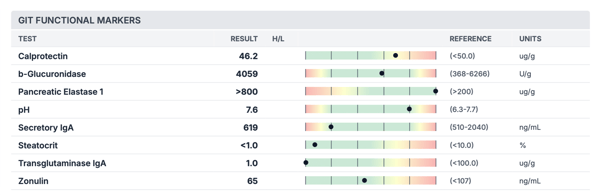
After six months of continued therapy and targeted gastrointestinal support, the patient demonstrated a significant improvement in objective and subjective markers of intestinal health. Her fecal calprotectin decreased to 46.2 µg/g, indicating substantially lower intestinal inflammatory activity compared with her initial assessment.
The patient also reported a noticeable reduction in gastrointestinal symptoms, including abdominal pain, burning, gas, and cramping. Together, the improvement in calprotectin and reduction in symptoms suggested better overall control of her Crohn's disease and supported the decision to continue her current therapeutic approach.
Marker change from baseline to six-month follow-up
Marker
Baseline
Six months
Reference
Calprotectin
Above 2000 µg/g (high)
46.2 µg/g
Under 50.0 µg/g
Secretory IgA
298 ng/mL (low)
619 ng/mL
510 to 2040 ng/mL
Occult blood
Positive
Negative
Negative
Anti-transglutaminase IgA
36.0 µg/g
1.0 µg/g
Under 100.0µg/g
Testing for Calprotectin
Calprotectin is measured on a stool sample as part of the GI Standard Profile and the GI Advanced Profile. Both profiles report it in the GIT Functional Markers section alongside the other digestive and immune markers, so the result arrives in context rather than in isolation.
The GI Advanced Profile adds culture and antimicrobial sensitivities for live yeast, pathogens, and dysbiotic bacteria. Where an elevated calprotectin sits next to an identified organism, sensitivities allow treatment to be directed rather than empirical, which is the current standard of care under antimicrobial stewardship principles.
Sample collection is designed for at-home use with minimal disruption to the patient's routine. As with any functional test, results are most meaningful when interpreted alongside patient history, symptoms, and the rest of the panel.
Partner With US BioTek
US BioTek brings more than thirty years of laboratory science to functional gastrointestinal testing, with calprotectin reported in full clinical context rather than as a standalone value.
What we offer:
Calprotectin reported alongside pancreatic elastase, secretory IgA, zonulin, beta-glucuronidase, steatocrit, and anti-gliadin IgA, so inflammation can be read against digestion and barrier function
Three profile tiers, so the panel can be matched to the clinical question
Culture and antimicrobial sensitivities on the GI Advanced Profile for both pharmaceutical and natural agents
Patient-friendly at-home collection designed for compliance
Responsive clinical and technical support to help you build and interpret the right panel
Talk to our team to learn more about the GI Standard Profile and GI Advanced Profile and how to use them in your practice.
Conclusion
Calprotectin answers a narrow question well: is the intestinal mucosa inflamed, and how actively. Levels above 200 µg/g point toward active inflammatory disease and warrant confirmation. Levels between 50 and 200 µg/g indicate chronic inflammation that may reflect disease in remission or medication effect. Levels below 50 µg/g redirect the workup toward non-inflammatory causes. None of those bands is a diagnosis on its own, which is why calprotectin earns its place next to the digestive, barrier, and microbiome markers rather than ahead of them. For clinicians deciding whether to treat inflammation or investigate something else entirely, that distinction is where the workup starts.
Sign-up for Monthly Research & Clinical Insights
Frequently Asked Questions
Calprotectin is a calcium-binding protein released by neutrophils, monocytes, and reactive macrophages. When the intestinal lining is inflamed, these immune cells migrate into the gut and the protein is shed into the stool, which makes it measurable on a stool test. It is very stable in stool, so it survives at-home collection and transport.
US BioTek reports a reference range of 0.0 to 50.0 µg/g. Results between 50 and 200 µg/g indicate chronic inflammation, and results above 200 µg/g are associated with active inflammatory bowel disease and gastrointestinal inflammation.
Calprotectin above 200 µg/g is associated with active inflammatory bowel disease and gastrointestinal inflammation. Elevation may also occur due to bacterial infection, colitis, or, less commonly, cancer. A high result should be reassessed after about four weeks for confirmation. Medication history matters here, since NSAIDs, aspirin, liver disease, and red blood cell transfusions can also raise levels.
Calprotectin below 50 µg/g is usually associated with viral gastrointestinal infections or non-inflammatory bowel conditions such as irritable bowel syndrome. In a symptomatic patient, a low result suggests the driver is not inflammatory and directs attention to digestion, motility, microbiome composition, or food sensitivity.
Calprotectin supports that distinction but does not make it alone. High levels are associated with active inflammatory bowel disease, while low levels are usually associated with non-inflammatory conditions such as IBS. Interpretation requires patient history, symptoms, and the surrounding markers, and elevated results should be confirmed on repeat testing.
Aspirin and non-steroidal anti-inflammatory medications may elevate calprotectin. Liver disease and red blood cell transfusions may also increase levels. Fecal calprotectin may be increased in newborns without indicating IBD in that population.
Yes. Immunosuppressive therapies and chemotherapy may neutralize normal immune responses and prevent the expected elevation of inflammatory markers. Prescription anti-inflammatories such as steroids or immunosuppressant medications may depress inflammatory marker levels on the GI profiles and may also alter the microbiome.
Both high and moderate results should be reassessed after about four weeks. Retesting confirms whether an elevation reflects ongoing inflammation or a transient event, and it establishes whether an intervention is changing the underlying process.
Calprotectin is included on the GI Standard Profile and the GI Advanced Profile, within the GIT Functional Markers section. It is not included on the GI Basic Profile, which covers PCR microbiome identification only.






 US BioTek Marketing Department: September 22, 2026 at 8:30 AM
 Dr. Rachel Onah, BSc. ND MRN