Specializing in Automation
US BioTek utilizes automated pipetting and barcoded samples for high levels of quality assurance and reproducibility.
The Organic Acids Profile utilizes liquid urine samples to offer personalized insights into metabolic health, aiding targeted treatment decisions and improved clinical outcome.


The new Organic Acids Test offers a more robust picture of your patients overall metabolic health, with expanded markers in Glycolysis, Detoxification Indicators, Bacterial and Yeast Dysbiosis Markers, Methylation Cofactors, Neurotransmitter Metabolism, and Nutritional Markers.
Pairing toxin testing with organic acids reveals the root causes of metabolic dysfunction. Organic acids highlight mitochondrial stress, detox burden, and neuroinflammation, while toxin testing identifies the toxins driving those imbalances, giving practitioners clearer answers and more targeted treatment options.

Environmental Toxins + Mycotoxins + Organic Acids


Everything on the MOE-Tox Profile + Heavy Metals


.jpg?width=5760&height=3070&name=Blake%20Carpenter%20-%20Biotek%202.28.19%20(29%20of%2056).jpg)
US BioTek specializes in accurate, automated, and reproducible testing. By removing human error wherever possible, our tests have a higher than industry standard rate of reproducibility.

US BioTek utilizes automated pipetting and barcoded samples for high levels of quality assurance and reproducibility.
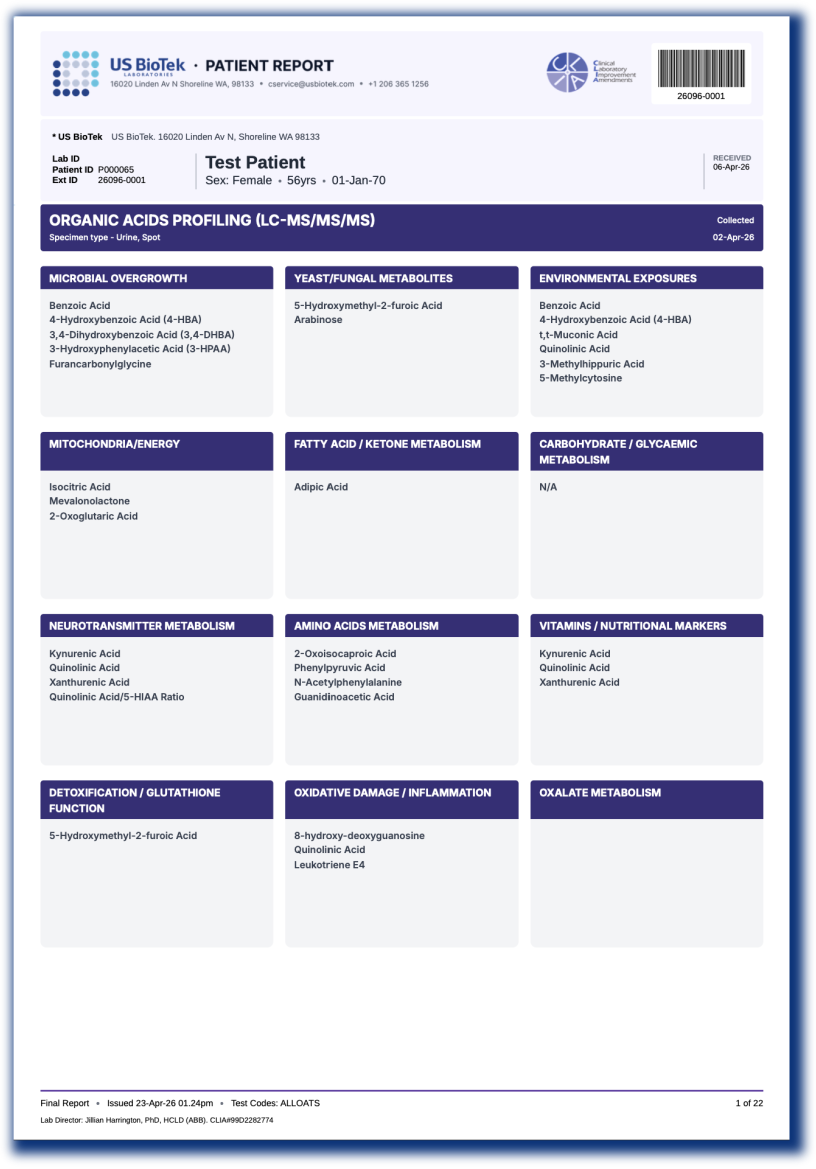
With both specific, quantifiable results and a visual indicator of range, our results are easy to interpret for practitioners and simple to explain to patients.

Each report gives a full picture of how each marker is affecting biochemical pathways and what can be done to support mitochondrial health.
A comprehensive interpretation guide to assist in understanding your results easily. Tailored nutrition and lifestyle recommendations are provided for conditions like aging-related metabolic issues, chronic inflammation, environment-induced mitochondrial dysfunction, and low-activity enzyme variants.

-1.jpg?width=1270&height=467&name=Blake%20Carpenter%20-%20Biotek%202.28.19%20(10%20of%2056)-1.jpg "Blake Carpenter - Biotek 2.28.19 (10 of 56)-1")
Liquid Chromatography/ Triple Quadrupole Mass Spectrometry (LC-MS/MS) instrumentation is used to quantitatively evaluate patient urine specimens for metabolically-derived organic acids and evidence of exposure to environmental pollutants.
Our Urinary Metabolic Profile is run on this comprehensive testing platform, which offers superb separation, resolution, and identification of compounds from a complex biological mixture such as urine, yielding precise and repeatable results.
MORE INFORMATION ON LC-MS/MS >>

For the Organic Acids Test, a liquid urine sample is needed.
LIQUID URINE COLLECTION INSTRUCTIONS>>

We invite licensed healthcare providers to set up an account with us.

Test kits are available to registered providers upon request. Use our online submission form to order the collection kits you require.

Easy collection and low volume specimen requirements are advantages of the US BioTek testing methodology. Follow our simple instructions.

Upon completion of specimen collection, complete our test requisition form and include it in your specimen shipment.

Providers can view and download results through our secure Clinician Portal, or request results by email.
Please note that US BioTek does not discuss test results directly with patients. Practitioners assume the responsibility of relaying test results to their patients. All results are confidential.

We invite licensed healthcare providers to set up an account with us.
Test kits are available to registered providers upon request. Use our online submission form to order the collection kits you require.
Easy collection and low volume specimen requirements are advantages of the US BioTek testing methodology. Follow our simple instructions.
Upon completion of specimen collection, complete our test requisition form and include it in your specimen shipment.
Providers can view and download results through our secure Clinician Portal, or request results by email.
Please note that US BioTek does not discuss test results directly with patients. Practitioners assume the responsibility of relaying test results to their patients. All results are confidential.