Environmental Toxins Panel
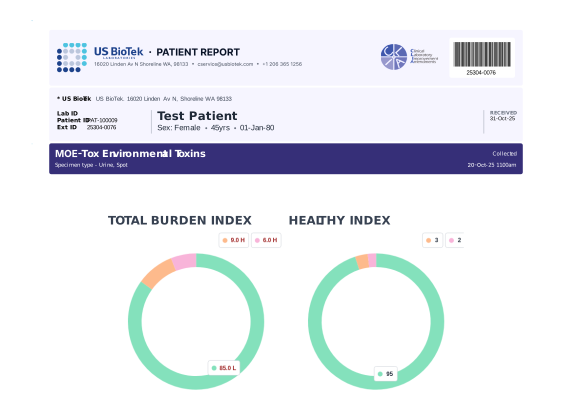
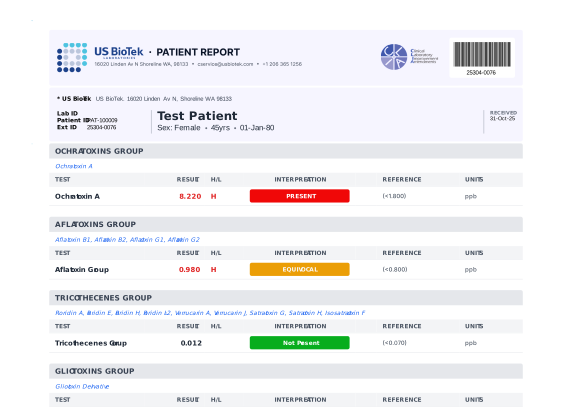
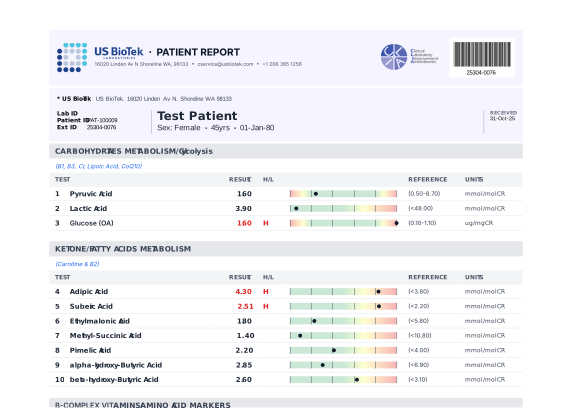
Our Environmental Toxins Profile is a key tool for assessing the impact of long-term exposure to environmental chemicals. By quantitatively measuring 49 select metabolites, this test helps determine an individual's toxic burden, offering essential data to guide targeted nutritional and detoxification interventions for improved health outcomes.

49 Metabolites Tested
- ENVIRONMENTAL PHENOLS
- HERBICIDES
- PESTICIDES
- MITOCHONDRIAL MARKERS
- PARABENS
- PHTHALATES
- VOLATILE ORGANIC COMPOUNDS
- PFAS
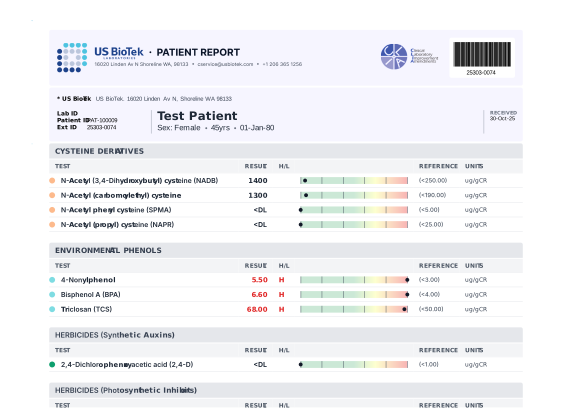
- CYSTEINE DERIVATIVES
- OTHER ENVIRONMENTAL POLLUTANTS

LC-MS/MS Technology
Liquid Chromatography/ Triple Quadrupole Mass Spectrometry (LC-MS/MS) instrumentation is used to quantitatively evaluate patient urine specimens for metabolically-derived environmental toxins.

Liquid Urine Specimen
This test is ran using a liquid urine tube sample.
| Specimen Requirement | |
| Liquid Urine Tube | 7 ml |

Results Available Within 14 Business Days
Results are expected to be available within 10-14 business days. Timing is based on the date the sample arrives at the lab.

Steps 1
ORDER THE KIT
Collection Kits are free for US BioTek account holders and ship within 1 business day

Steps 2
COLLECT SAMPLE
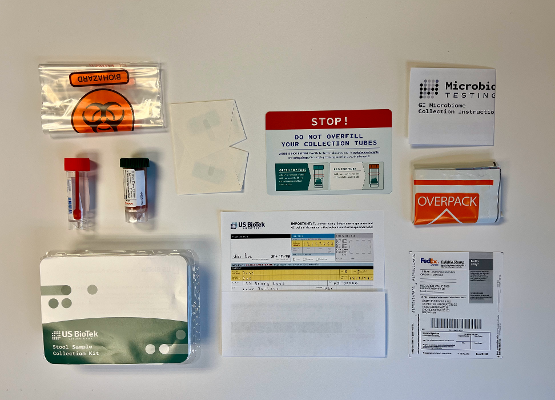
Kits are designed for the simplest & most hygienic collection process possible

Steps 3
SHIP SAMPLE
Prepaid return shipping labels are included making shipping simple

Steps 4
RECEIVE RESULTS
Results are delivered to the provider portal with industry leading turnaround times.
Markers Tested

Environmental phenols
- 4-Nonylphenol
- Bisphenol A (BPA)
- Triclosan (TCS)
- Bisphenol S (BPS)
Herbicides
- Synthetic Auxins
- 2,4-Dichlorophenoxyacetic acid (2,4-D)
- Photosynthetic Inhibitors
- Atrazine
- Atrazine mercapturate
- EPSP Inhibitors
- Aminomethylphosphonic acid (AMPA)
- Glyphosate
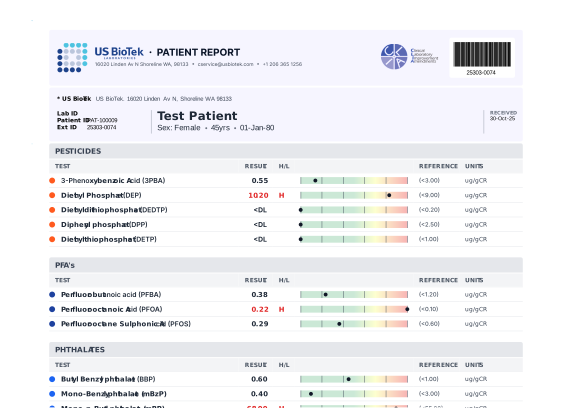
Pesticides
- 3-Phenoxybenzoic acid (3PBA)
- Diethyl phosphate (DEP)
- Diethyldithiophosphate (DEDTP)
- Diphenyl phosphate (DPP)
- Diethylthiophosphate (DETP)
Mitochondrial Markers
- Tiglylglycine (TG)
Parabens
- Benzylparaben
- Butylparaben
- Ethylparaben
- Methylparaben
- Propylparaben
Phthalates
- Mono-Benzyl phthalate (mBzP)
- Mono-n-Butyl phthalate (mBP)
- Mono(3-carboxypropyl) Phthalate (mCPP)
- Mono-ethyl phthalate (MEtP)
- Mono-2-ethylhexyl phthalate (MEHP)
- Mono-(2-ethyl-5-hydroxyhexyl) phthalate (MEHHP)
- Mono-(2-ethyl-5-oxohexyl) phthalate (MEOHP)
- Mono-n-octylphthalate (mOP)
Volatile Organic Compounds
- 2-Hydroxyethyl-mercapturic acid (HEMA)
- Phenylglyoxylic acid (PGO)
PFAS
- Perfluorobutanoic acid (PFBA)
- Perfluorooctanoic acid (PFOA)
- Perfluorooctane sulfonic acid (PFOS)
Cysteine Derivatives
- N-Acetyl (3,4-Dihydroxybutyl cysteine (NADB)
- N-acetyl (carbomoylethyl) cysteine
- N-Acetyl Phenyl Cysteine (SPMA)
- N-Acetyl (Propyl) cysteine (NAPR)
Other Environmental Pollutants
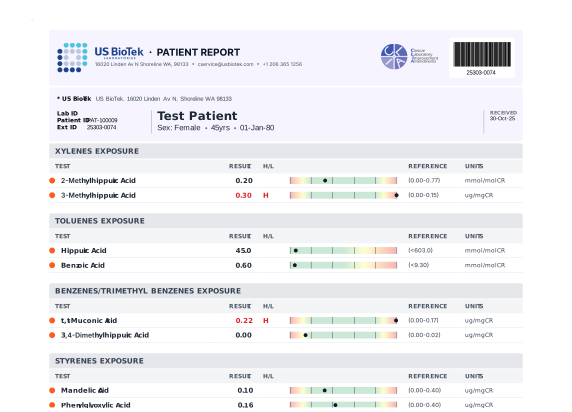
- 3-Me-Hippuric acid
- 2-Me-Hippuric acid
- Hippuric acid
- Benzoic acid
- t,t-Muconic acid
- 3,4-DimethylHippuric acid
- Mandelic acid
- Mandelic acid + Phenylglyoxylic acid (PGO)
- Phthalic acid
- Quinolinic acid
- 4-Hydroxybenzoic acid
- Alpha-Hydroxybutyric acid

AUTOMATED SYSTEMS
Increase precision by removing the potential for human error and streamlining processing for faster results

SUPERIOR ASSAY PREPARATION
Ensure top-quality results with confirmatory antigen testing & daily +/- controls for antigen validation.

DUPLICATE TESTING
Verify accuracy with duplicate testing on ELISA antibody assessments and confirmatory cultures on Microbiome testing.

EXTERNAL ACCOUNTABILITY
We ensure test accuracy by using third-party agencies to verify our quality.
Need Assistance With
Specimen Collection?
Accurate results start with proper specimen collections. Watch the video or download detailed instructions to walk you through the collection process.